Archived story4 articles · 4 publishers
Swiss glaciers lose 5% of ice in a year, 20% in five years
- Published
- Updated
- Reports
- 4 from 4 publishers
Swiss glaciers lost over 5% of their ice in a single year, with a cumulative 20% loss over five years, according to research. Scientists described the melting as an 'explosion of melt rates' driven by climate change, threatening water supplies and ecosystems across Europe.
AI summary · Original reporting is linked alongside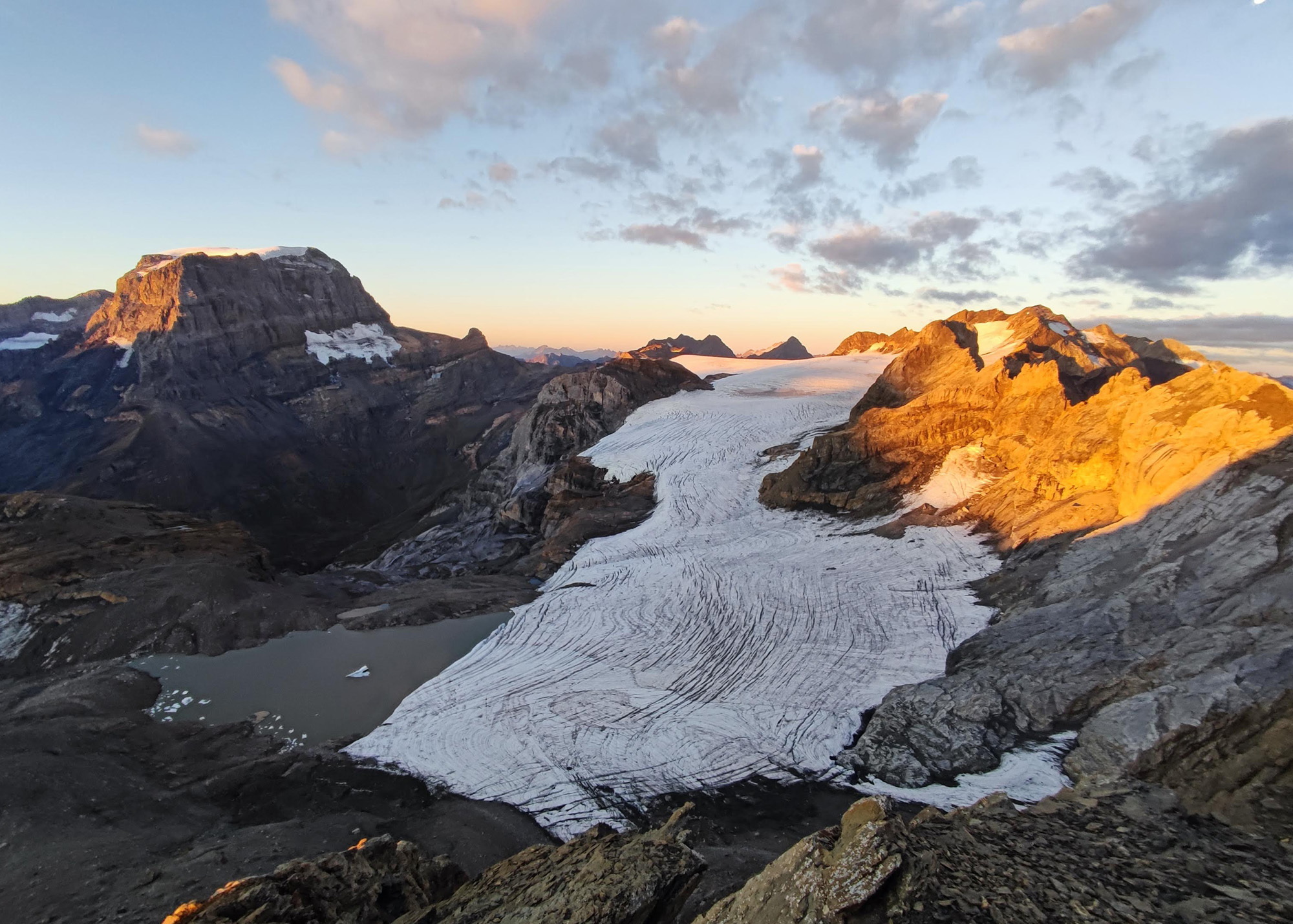
How the outlets frame it
4 outlets, each read from its own headline and opening- Stands outThe Guardian (tabloid, loaded, one-sided) and Al Jazeera (mildly sensational, one-sided).
- PlainestNPR.
Tap a logo to see the outlet, the headline it was read from, and where it sits on every measure.
Does the report cast the development as bad news or good news?
All 4 read as negative.
Does the report play the story up to grab attention?
Between mildly sensational and tabloid; no outlet stands apart.
Do the words judge rather than describe?
The Guardian stands apart as loaded; the other 2 read as some charged words.
1 outlet not placed: the reading was split between distant levels.
Does the report give room to one side only?
All 3 read as one-sided.
1 outlet not placed: the reading was split between distant levels.
All 4 outlets and the headlines they were read from
Al Jazeera
‘Catastrophic year’ as Swiss glaciers lose 5% of ice after heatwavesFraming: Negative · Sensationalism: Mildly sensational · Loaded language: not placed · Slant: One-sided
BBC News
Swiss glaciers suffer 'disastrous' year of ice loss, threatening water suppliesFraming: Negative · Sensationalism: Mildly sensational · Loaded language: Some charged words · Slant: One-sided
NPR
Swiss glaciers suffer another year of record ice lossFraming: Negative · Sensationalism: Mildly sensational · Loaded language: Some charged words · Slant: not placed
The Guardian
‘Explosion of melt rates’: 20% of Swiss glaciers lost in five yearsFraming: Negative · Sensationalism: Tabloid · Loaded language: Loaded · Slant: One-sided
Each outlet is read blind: a classifier sees its headline and opening next to the story's own headline, without the outlet's name, and scores how the report presents the story. A logo sits at the classifier's average reading, so it can fall between two levels. These readings compare coverage of this story only; they are not ratings of the outlets.
Where the outlets diverge
Two headlines from opposite endsLoaded language · Neutral → Loaded
The story as a whole
Read from all the reports togetherInternational without clear US relevance
Ongoing trend
Not disputed in the text
No violence reported
Other signals
6 found · 15 not present- Article typeNews report
- TopicClimate and environment
- Where it happensEurope
- What a reader getsNew facts
- ToneAlarming
- Humanitarian impactFood or water insecurity
- Policy areanot present
- Government levelnot present
- Main political actornot present
- Civil liberties questionnot present
- Market relevancenot present
- Which marketunclear
- Market horizonnot present
- Who is economically affectednot present
- Corporate dimensionnot present
- Conflict dimensionnot present
- Conflict direction reportednot present
- Public safetynot present
- Public healthnot present
- Scientific evidencenot present
- Legal risk in the reportingnot present
The 10 stories everyone is covering, in your inbox at 7 am your time.
grouped.news is free, independent and has no paywall. If it saves you time, chip in.Buy us a coffee ↗